How we work
Roof problems we repair

Warranty
Our 3-year workmanship warranty
Every repair we carry out is backed by a 3-year workmanship warranty. If something we have worked on fails within that period because of how we did the work, we come back and put it right.
It does not cover a separate fault elsewhere on the roof, or damage from a later storm, and we will always tell you plainly which category something falls into rather than leaving you to work it out. The warranty terms are set out in your written quote before you agree to anything.
Service scope
Do you need a repair or a restoration?
Understanding whether your roof needs a repair or a full restoration comes down to one question: is the problem isolated or systemic?
A roof repair is a surgical fix for a specific, localised issue, such as replacing a few broken tiles, resealing a single flashing, or swapping out a handful of corroded fixings. It is the most cost-effective solution when the rest of your roof is still in sound condition.
A roof restoration, by contrast, is a comprehensive renewal of the entire roof. It becomes the better-value choice when issues are no longer isolated. For instance, if your ridge pointing has failed in a few spots, a repair is the right call. However, if that pointing has failed across every ridge and hip, returning multiple times to patch specific sections is an inefficient use of your budget. In those cases, a full restoration leaves you with a sound, waterproof roof rather than one that is constantly being patched.
Most homeowners will need minor roof repairs periodically, often after a storm or due to the wear and tear of a few missing or cracked tiles. A restoration, however, is a major lifecycle event. It is typically a once-in-a-generation project intended to reset the clock on your roof’s health, usually required when the main components (like fixings, mortar, or coatings) reach the end of their functional lifespan.
Roof type

Tile roof repairs
Tile roofs tend to fail in predictable ways. The tiles themselves usually outlast the mortar holding the ridge caps in place, so most tile repairs are pointing and bedding work rather than tile replacement.
Where tiles have cracked or broken, we replace them and match the profile and colour to the existing roof as closely as the tile allows. Where the ridge pointing has cracked, we strip back the old mortar, rebed the caps where the bedding has failed, and repoint using a flexible Selleys pointing compound rather than a rigid mortar mix. Flexible pointing moves as the roof expands and contracts through the heat of the day, which is why rigid mortar cracks in this climate.
We also check the valleys while we are up there. Valley irons collect leaf litter and debris, and once they corrode or become blocked, water backs up under the surrounding tiles. It is a common cause of leaks that get blamed on the tiles themselves.

Metal and tin roof repairs
Metal and Colorbond roofs fail differently from tile. The sheets are generally sound long after the fixings have gone, and the coastal air on the Gold Coast accelerates corrosion at every fastening point.
Most metal roof repairs we carry out involve replacing corroded screws and perished washers, treating rust where it has taken hold, and resealing at the fixing points. Where sheets have lifted in a storm, we refix them and check the surrounding fasteners, since wind that lifts one sheet usually loosens the ones beside it. Where sheets have corroded through, we replace the affected sheets.
Flashings and capping on metal roofs need the same attention as on tile. We check the ridge capping, the barge capping and the flashings around any penetrations, because those junctions are where most metal roof leaks originate.
Cost
What a roof repair costs
Roof repairs are quoted per job rather than off a price list, and a few things move the figure.
The extent of the damage is the main one. Replacing a handful of tiles or a run of fixings is a different job from repointing an entire ridge line. Roof type matters, since tile and metal call for different materials and different work. Access matters too, because a steep or awkward roof takes longer to work on safely. And whether the problem is isolated or systemic makes a considerable difference, as a single failed flashing is a repair, while pointing that has failed across the whole roof is closer to restoration work.
We provide a written quote after we inspect the roof, rather than a range over the phone that changes once we arrive. On standard repair work, we do not ask for a deposit.
Our process
How we work
STEP 1
You get in touch
You can call or send the form and tell us your suburb and roof type. We will get back to you within one to two days, or sooner if we can.
STEP 2
We inspect the roof
We get on the roof, find the cause, and photograph what we find.
STEP 3
We explain what we found
We show you the photographs and explain what needs doing, what can wait, and what does not need doing at all.
STEP 4
You receive a written quote
You receive the scope and the price in writing, along with the warranty terms.
STEP 5
We book the work in
Once you are ready, we book the work in and keep you across the timeline.
Our work
Recent works

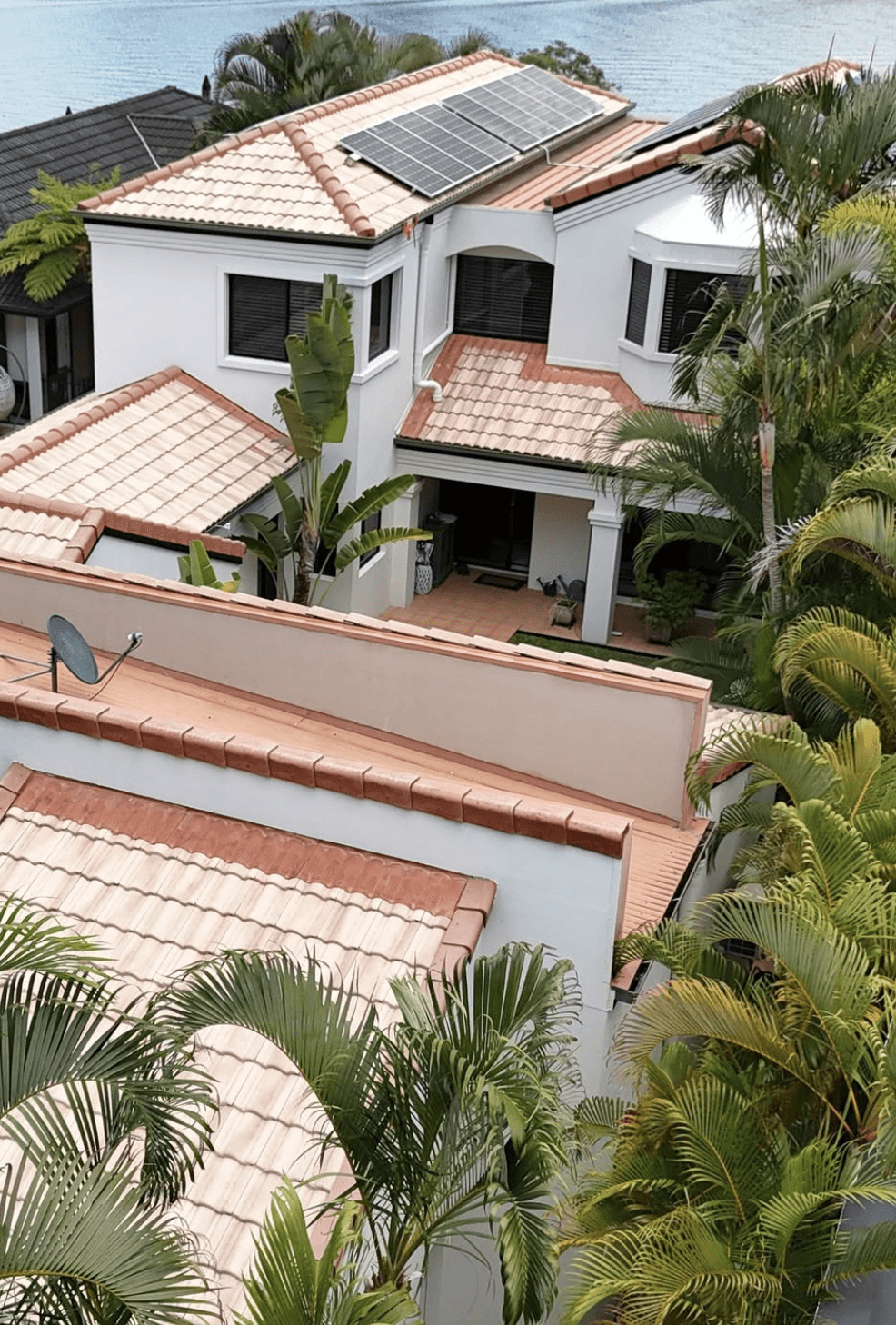
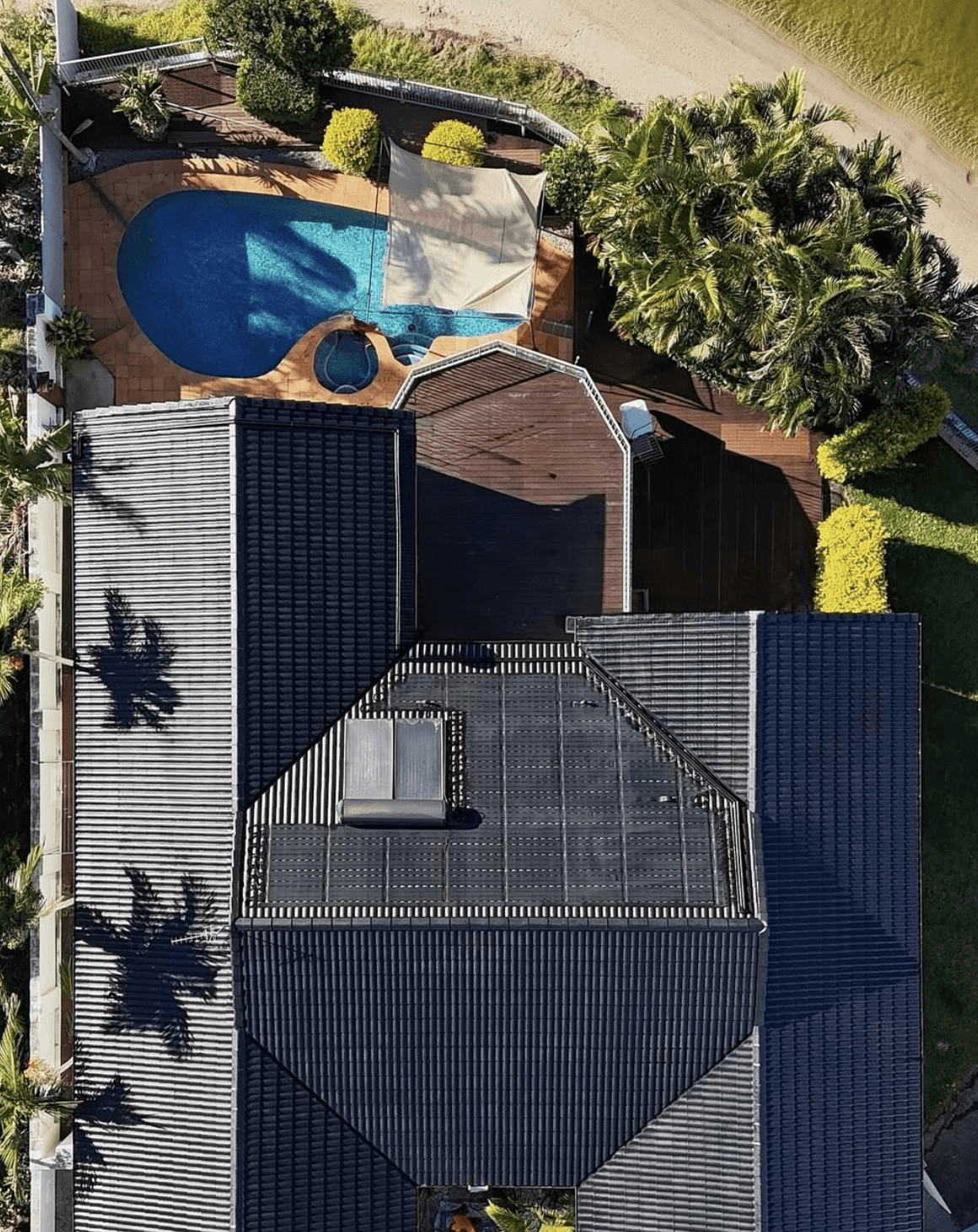
Paradise Point Roof Refresh
A full roof transformation, completed from tile replacement through to final painting. The project included updated pointing and a multi-layer restoration system designed for durability, weather protection, and a seamless finish.
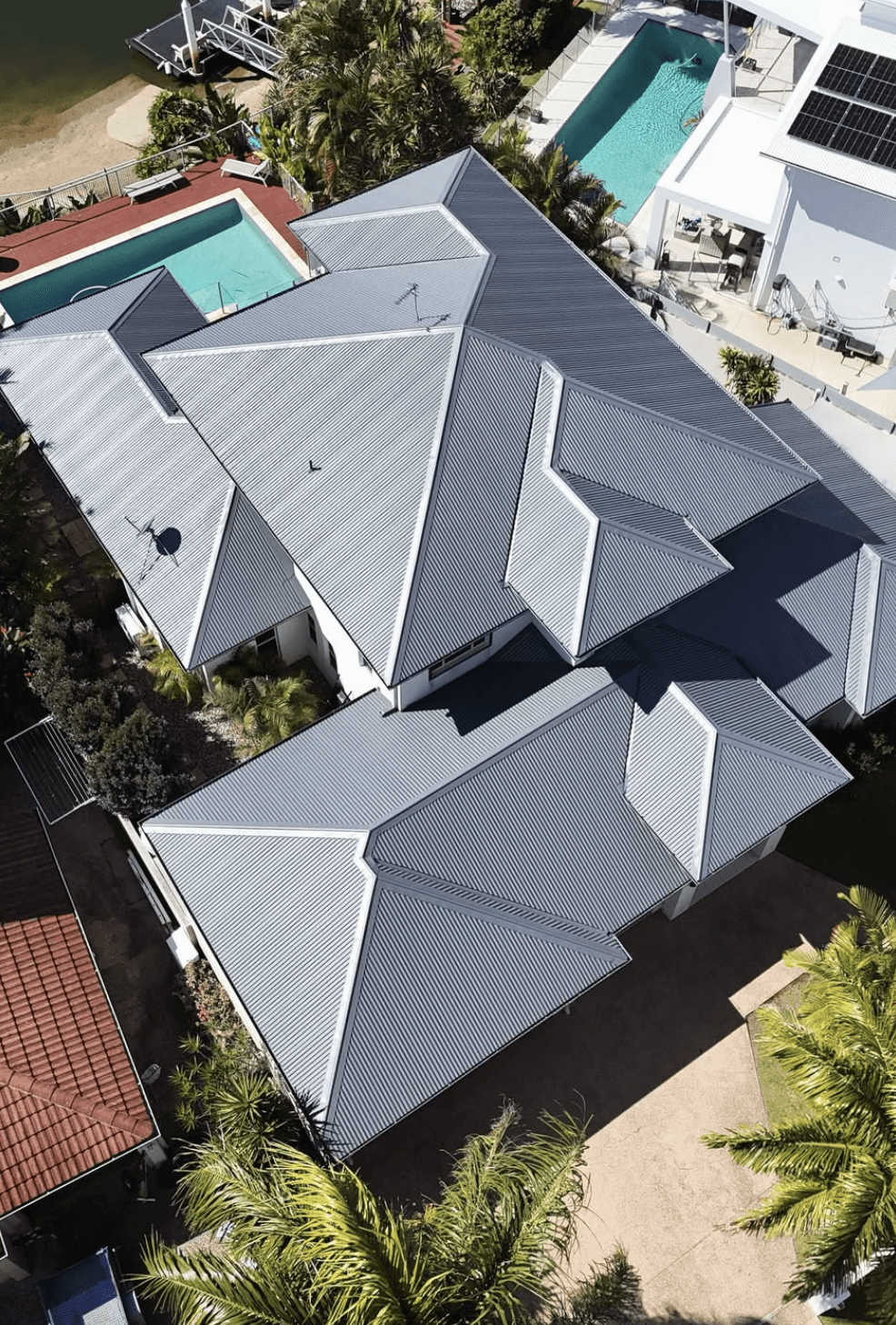
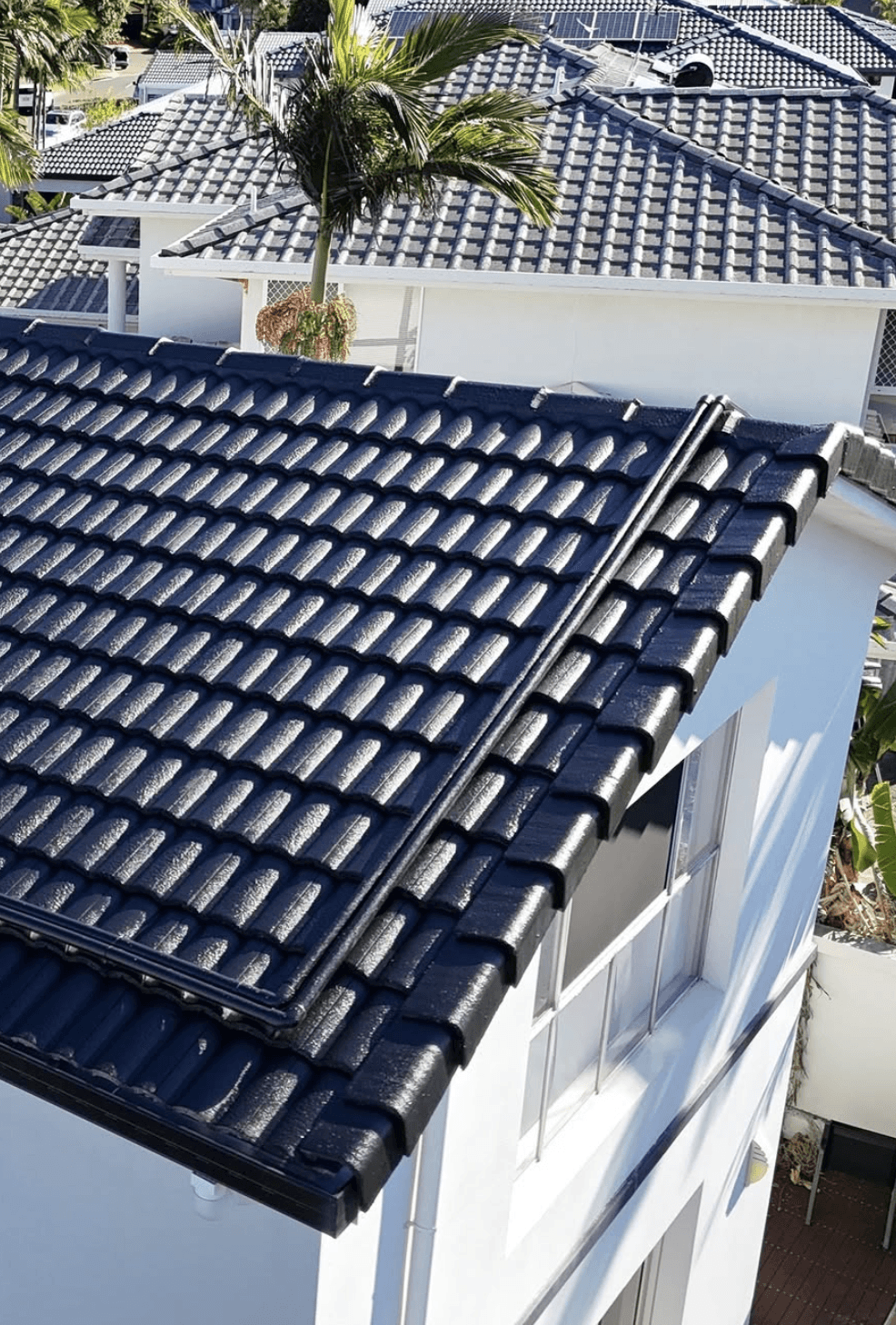
Benowa Waters Exterior Works
A comprehensive exterior update completed across roofing and finishing details. This project included roof, gutter, and fascia works, replacement of roofing screws, and lifting sheets to ensure structural integrity.

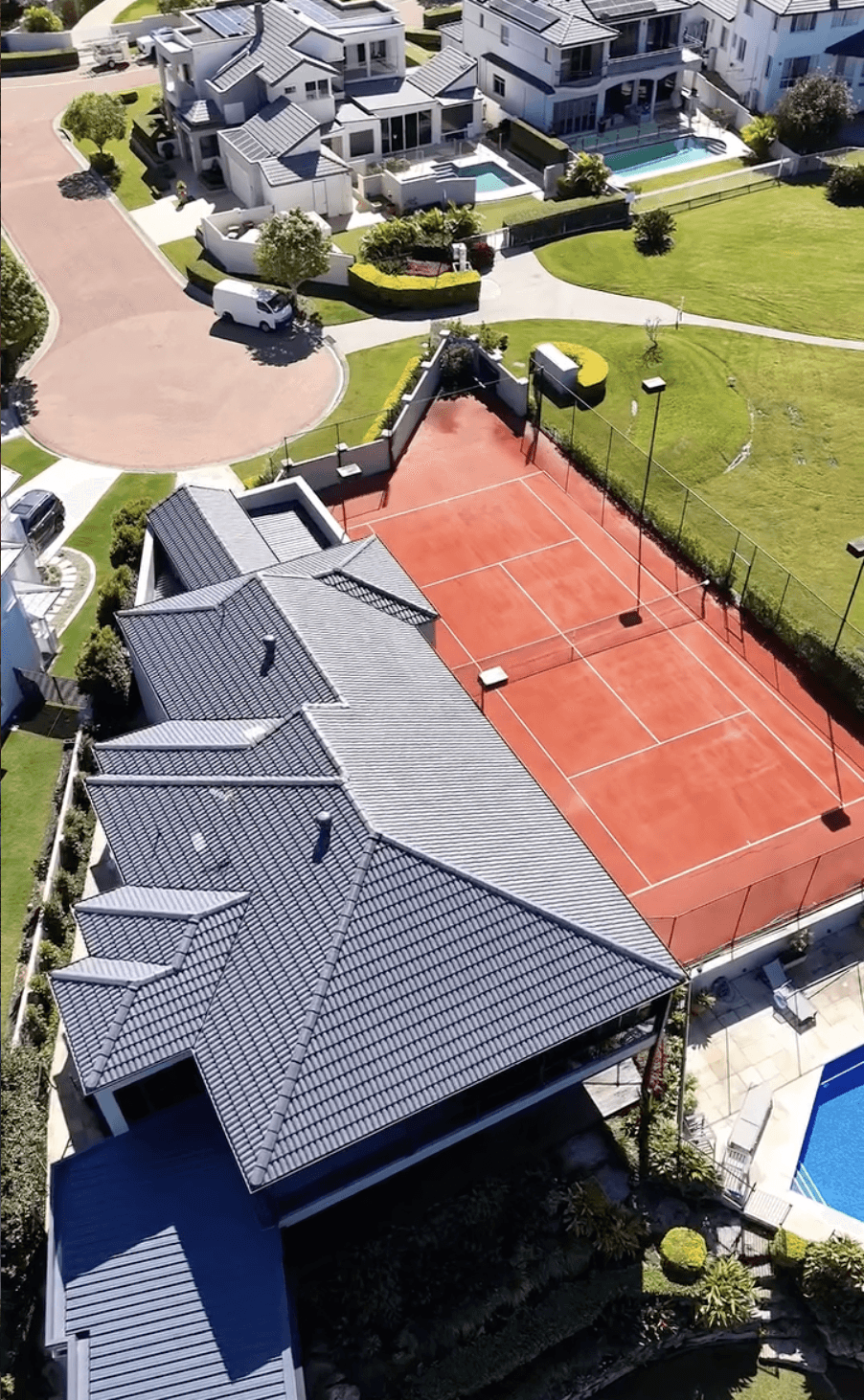
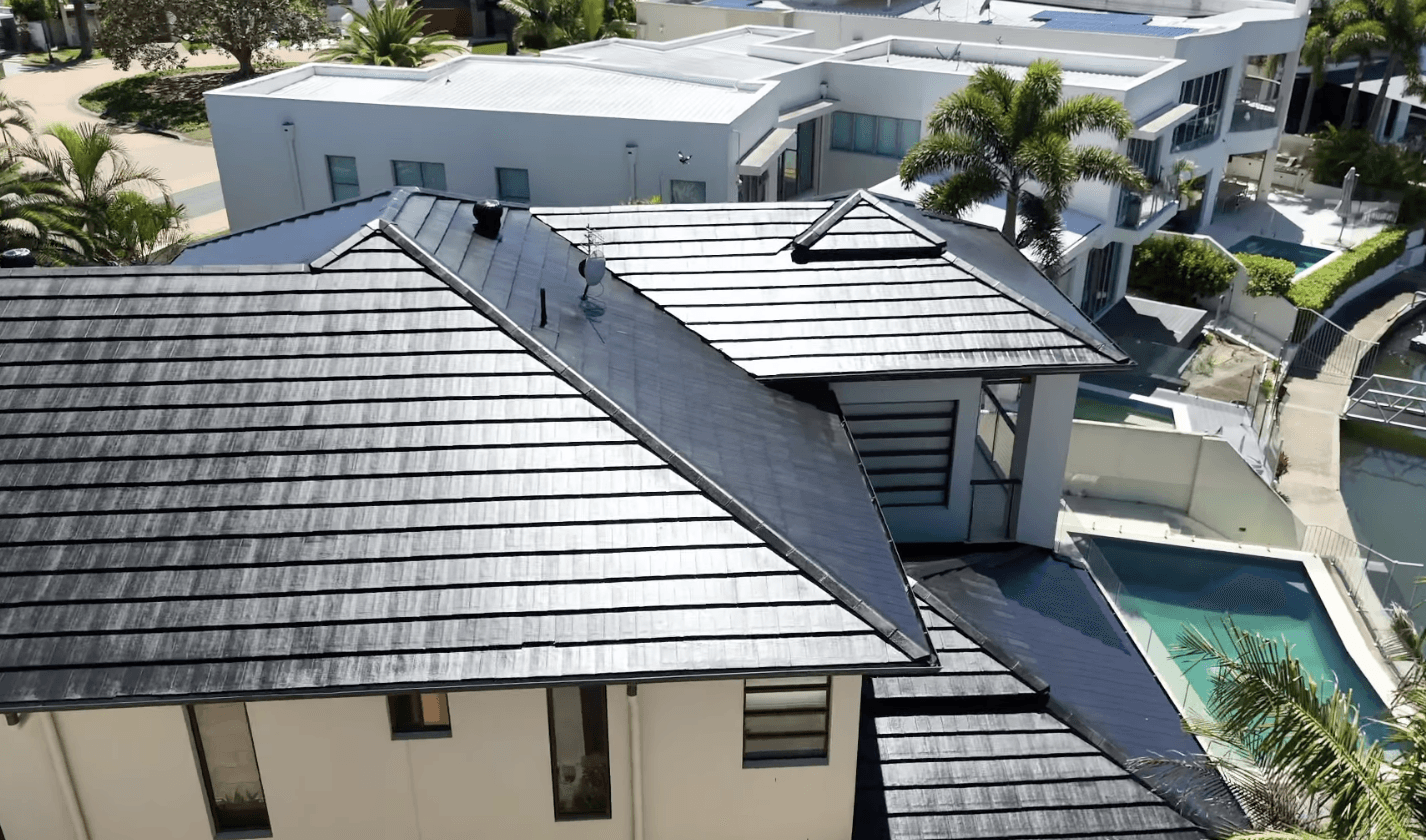
Bonogin Roof Repairs
The scope included removal of all shade sail fittings, replacement of damaged guttering and fascia, re-sarking to restore waterproofing, and a full re-set and re-lay of ridge pointing to ensure long-term protection.
No deposit needed
Book a free roof inspection
Tell us your suburb and what you are seeing, and we will arrange a time to come and look. You will get the scope and the price in writing, at no cost and with no obligation.
FAQs
Frequently Asked Questions
What is the most common roof repair?
On Gold Coast tile roofs, it is ridge pointing. The mortar along the ridge caps takes the full daily cycle of heat and cooling, and rigid mortar cracks under that movement long before the tiles themselves fail. Once it cracks, the caps loosen, and water gets in.
On metal roofs, the most common repair is fixings: corroded screws and perished washers that let the sheet lift slightly at each fastening point. In both cases, the roof surface is usually sound, and the failure is at the joins, which is why a repair often costs far less than people expect.
How much should I pay for roof repairs?
There is no honest single figure, because a repair can be one dislodged ridge cap or an entire ridge line that needs stripping and repointing. What moves the price is the extent of the damage, the roof type, how difficult the roof is to access safely, and whether the fault is isolated or repeating across the whole roof. What we would say is this: be cautious of anyone quoting a firm price over the phone without seeing the roof. That figure almost always moves once they arrive. We inspect first, photograph what we find, and then provide the scope and price in writing.
What if my roof tiles are no longer made?
This comes up often on roofs built in the 70s and 80s, where the original tile profile has been discontinued. Salvaged and secondhand tiles in older profiles are still available, and we source matched replacements wherever we can. Where an exact match isn't possible, we will show you the closest option and be upfront about how visible the difference will be, rather than fitting something that doesn't match and hoping you don't notice it from the ground.
How long does a roof repair take?
Most straightforward repairs are done in a day. Larger work, such as repointing an entire ridge line or replacing a run of corroded fixings across a metal roof, can run across several days. Weather is the other factor, since some work cannot be completed safely or properly in the wet. We will give you a realistic timeframe with your written quote rather than a date we cannot hold.
Do you handle storm damage and insurance claims?
We assess the full extent of storm damage, not just what's visible, document it with photographs, and provide the written scope and detail your insurer will ask for. We can work to your claim timeline where the assessment is needed by a particular date. We don't decide what your policy covers, but we will give your insurer the detail they need to make that call properly.
Do you do full roof replacements?
No. We restore, repair, clean and paint roofs. We do not carry out full re-roofing or new roof installation. If your roof is genuinely past restoration, we will tell you that after the inspection, even though it is not work we take on; we would rather say that than sell you a repair that will not hold.
Do you offer a warranty on repairs?
Yes. All our workmanship carries a 3-year workmanship warranty. If something we have worked on fails within that period because of how we did the work, we come back and put it right. It does not extend to a separate fault elsewhere on the roof or to damage from a later storm, and we will tell you plainly which category something falls into. The warranty terms are set out in your written quote before you agree to anything.
Do you take a deposit?
We do not take a deposit on standard repair work. Larger projects may involve one, and if so it will be set out clearly in your written quote before you agree to anything.